Parkinson's disease care plans are, understandably, built around the patient — medication schedules, physiotherapy referrals, symptom tracking. What's discussed far less often, but increasingly documented by research, is the toll caregiving itself takes on spouses, adult children, and other family members who quietly become full-time caregivers, often without any formal training or support.
What "Caregiver Burden" Actually Means
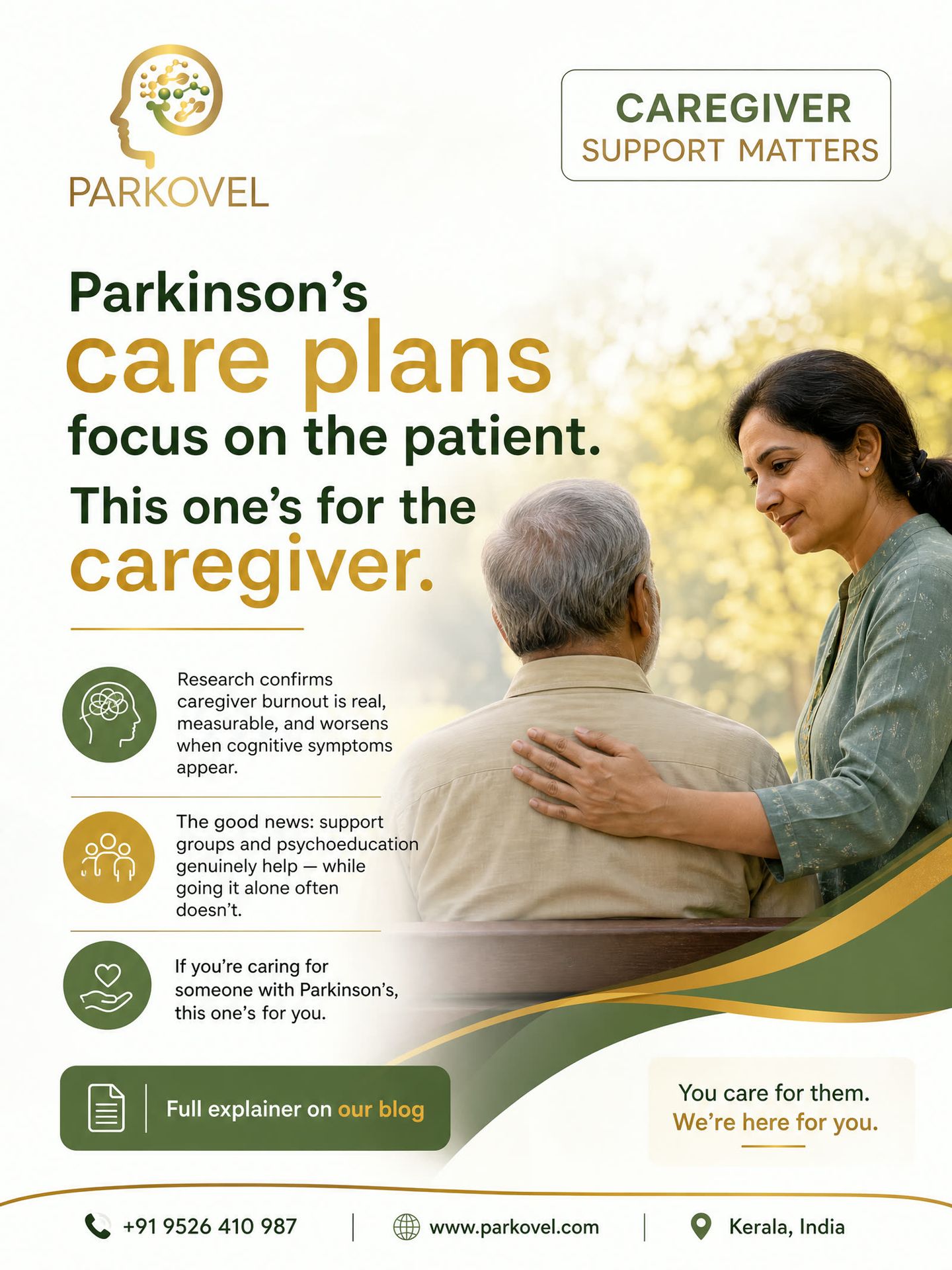
Caregiver burden refers to the adverse effect of caregiving on a caregiver's physical, emotional, social, spiritual, and financial well-being — a definition broad enough to capture how far-reaching the impact really is. The unique symptom profile of Parkinson's disease, which includes both motor and non-motor challenges, can amplify a patient's needs and reliance on others, leading to adverse outcomes for both the patient and the caregiver when support isn't in place.
It Gets Harder With Cognitive Symptoms
Not all Parkinson's caregiving is equally demanding. Research has specifically found that caregiver burden is increased in Parkinson's disease with mild cognitive impairment (PD-MCI) — meaning families managing both motor symptoms and early cognitive changes face a measurably heavier load than those managing motor symptoms alone. This is worth flagging early, because cognitive changes often creep in gradually and caregivers may not immediately connect rising personal stress to this specific shift in their loved one's condition.
What Actually Helps — and What Doesn't
The research here is genuinely useful because it doesn't just confirm caregiving is hard; it points to what works. Cognitive therapies and psychoeducational interventions can provide meaningful support and teach coping strategies that reduce caregiver burden. Caregivers may also benefit from general or Parkinson's-specific support groups, which offer both practical knowledge and the simple relief of connecting with others facing the same daily reality.
Interestingly, one intervention type underperforms expectations: self-management programs are among the least effective at reducing burden and may actually impose additional tasks on already-stretched caregivers, rather than lightening the load. This is a useful, evidence-based corrective to the common assumption that simply giving caregivers more information or more responsibility automatically helps.
A Shift in How Researchers Think About Caregiving
Recent scholarship argues for a genuine paradigm shift in caregiver research, moving emphasis toward modifiable, protective factors — caregiver psychological well-being, coping strategies, and social support — rather than only measuring and describing burden itself. Some proposed models now aim to holistically manage caregivers' financial, emotional, and social needs together, not just relieve burden reactively, but actively support caregivers to flourish alongside the person they're caring for.
Practical Starting Points
For families just beginning this journey, three starting points have real evidence behind them: joining a Parkinson's-specific caregiver support group (in person or online), seeking a brief course of psychoeducation or cognitive-behavioural support for the caregiver specifically — not just the patient — and building small, protected pockets of personal time into the caregiving routine before burnout sets in, rather than after.
Frequently Asked Questions
Is caregiver burnout a recognised medical concern, or just normal tiredness?
It's a well-documented phenomenon in medical research, with measurable effects on caregivers' physical and mental health — it's worth taking seriously, not dismissing as ordinary tiredness.
Does cognitive decline in the patient make caregiving harder?
Yes — research specifically shows caregiver burden increases when the patient has mild cognitive impairment alongside motor symptoms, compared to motor symptoms alone.
Are self-help caregiving guides and self-management programs effective?
Research suggests they're actually among the less effective interventions and can sometimes add burden rather than reduce it; structured support groups and professional psychoeducation tend to perform better.
Where can Parkinson's caregivers in India find support groups?
Many Indian cities now have Parkinson's disease support associations and neurologist-affiliated support groups; ask your loved one's treating neurologist or a large hospital's neurology department for local referrals.
Caring for someone with Parkinson's is a long journey, and protecting your own wellbeing isn't a luxury — it's what allows you to keep showing up, well, for the years ahead.
Sources
- PMC, "Caregiver Burden in Parkinson Disease: A Scoping Review of the Literature from 2017-2022"
- Springer / Neurological Sciences, "Caregiver burden in Parkinson's disease: a nationwide observational survey" (2025)
- PMC, "Caregiver burden is increased in Parkinson's disease with mild cognitive impairment (PD-MCI)"