Somewhere between medical treatment and pure joy sits one of the more delightful areas of Parkinson's research: dance and music therapy. What started as small pilot programs — Argentine Tango classes for Parkinson's patients, choir groups meeting weekly — has grown into a genuinely evidence-backed area of complementary care, with measurable effects on movement, mood, and speech.
Why Rhythm Works on a Parkinson's Brain
Parkinson's disrupts the brain's internal timing mechanisms — the same circuits responsible for smooth, automatic movement. External rhythm, it turns out, can partially substitute for that lost internal timing, giving the brain an outside cue to synchronise movement to. This is part of why patients who "freeze" mid-step while walking normally can sometimes move fluidly the instant music with a strong beat starts playing.
What the Dance Research Shows
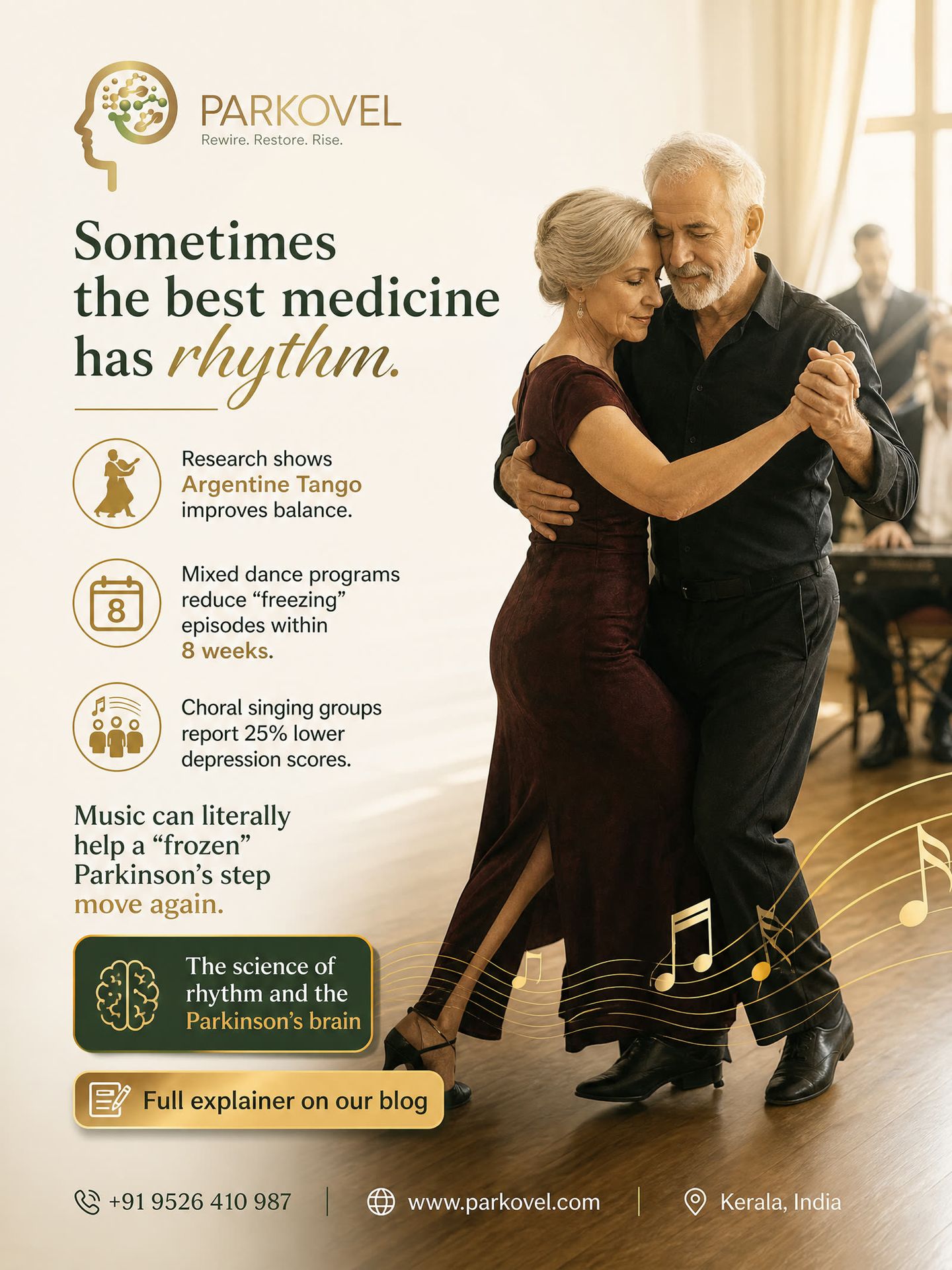
Dance-based therapies for Parkinson's may help improve fluidity of movement and balance while providing aerobic activity as a welcome side benefit. Different dance styles appear to target different challenges specifically: research on Argentine Tango found it improves general mobility and balance, while mixed dance programmes were shown to decrease freezing-of-gait episodes after just eight weeks of regular practice — a genuinely fast timeline for a meaningful functional improvement.
What the Music Research Shows
Song-based therapies for Parkinson's may improve voice quality, respiratory function, and swallowing — echoing some of the same benefits seen with dedicated speech therapy programs like LSVT LOUD. Music has also been used as a distinct rehabilitation tool specifically to improve Parkinson's-related gait and speech disorders, functioning almost like an external metronome the nervous system can lock onto.
The Social and Emotional Dimension
The benefits extend well past the purely physical. Qualitative research has found that most participants experience dance programmes as helpful for regaining a sense of positive identity after diagnosis, alongside decreased feelings of isolation, better mood and quality of life, reduced motor symptoms, and enhanced overall functioning. Group singing shows a similarly strong social effect: participants in 12-week choral programs have reported 25% reductions in depression scores — a meaningful figure given how common and under-treated depression is in Parkinson's, as covered elsewhere on this blog. Music-based complementary therapies can increase socialisation and appear to have mood- and cognitive-boosting benefits beyond the direct physical training effect.
Where the Evidence Still Needs to Grow
It's worth being precise here, as good research reporting should be: while the overall evidence for performing arts therapies in Parkinson's is genuinely encouraging, it is not yet possible to say definitively which specific modality — Tango versus mixed dance, choral singing versus individual music therapy — is most beneficial for which specific outcome. What's clear is that the category as a whole, broadly defined, produces real and repeatable benefits.
Frequently Asked Questions
Do you need dance experience to benefit from Parkinson's dance therapy?
No — most programs are specifically designed for people with no dance background and adapt movements to each participant's ability level and disease stage.
How quickly can dance or music therapy show results?
Some studies have shown measurable improvements, like reduced freezing of gait, within as little as eight weeks of regular sessions.
Is dance therapy a substitute for standard physiotherapy?
It's best viewed as a complement rather than a replacement — dance provides aerobic activity, balance training, and social/emotional benefits that work alongside, not instead of, standard prescribed physiotherapy.
Can music therapy help with speech, not just movement?
Yes — song-based and rhythm-based therapies have shown benefits for voice quality, respiratory strength, and swallowing function, in addition to their well-known effects on gait and movement.
Finding a Parkinson's-friendly dance or music class — many cities now run dedicated sessions through Parkinson's support organisations — can be a genuinely enjoyable addition to a broader care routine that also includes medication, physiotherapy, and nutritional support.
Sources
- PMC, "Benefits of dance for Parkinson's: The music, the moves, and the company"
- PMC, "Music Therapy for Gait and Speech Deficits in Parkinson's Disease: A Mini-Review"
- BMC Neurology, "A systematic review of active group-based dance, singing, music therapy and theatrical interventions for quality of life, functional communication, speech, motor function and cognitive status in people with Parkinson's disease"