Parkinson's disease is usually recognised by what's visible — tremor, stiffness, slower movement. But some of its most consequential symptoms are entirely invisible, and they often arrive first. Depression, anxiety, and subtle cognitive changes can appear years before a single motor symptom shows up, yet they remain among the most under-discussed and under-treated aspects of the disease.
How Common Are These Symptoms, Really?
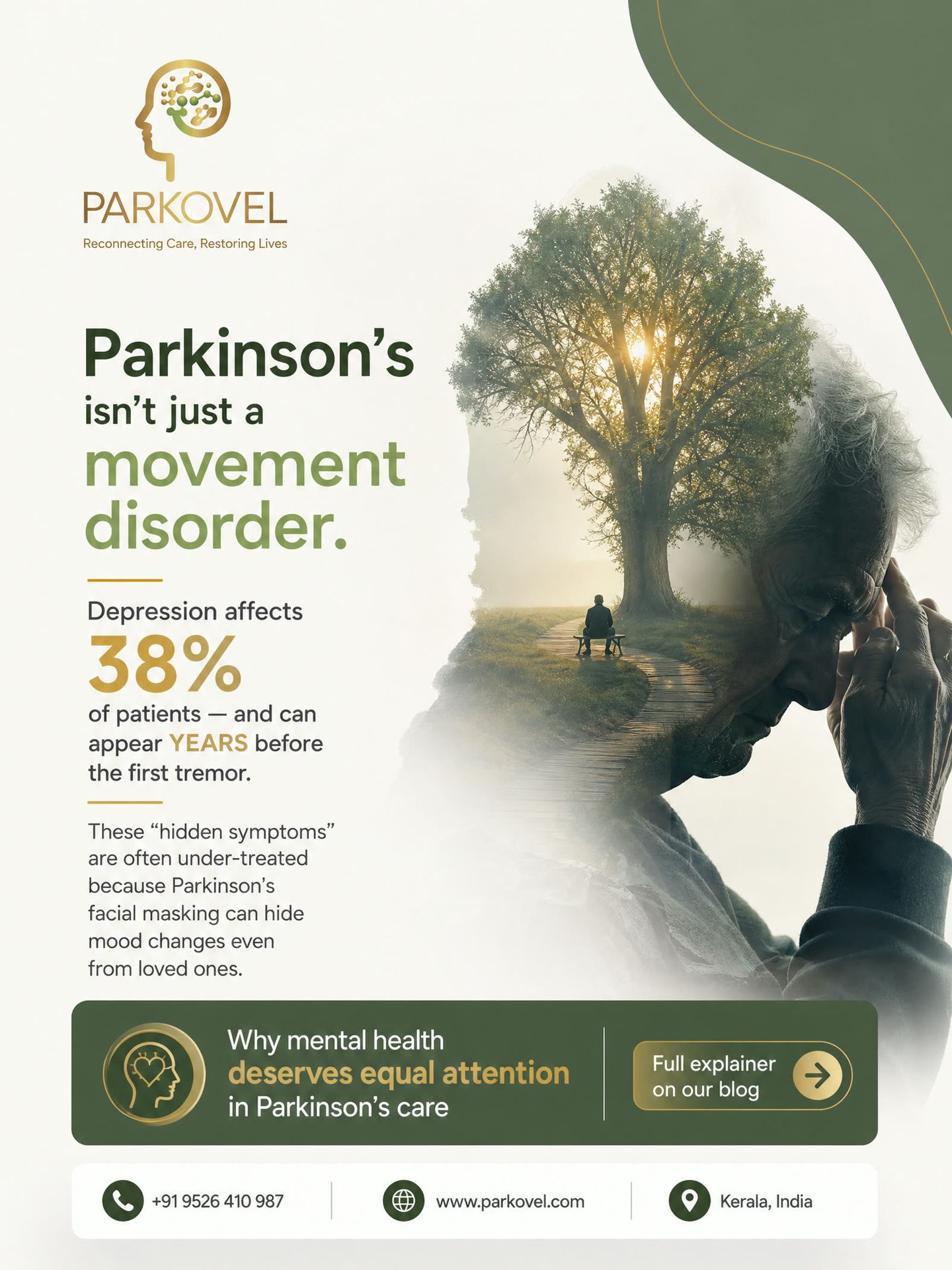
The numbers are striking. Research places the prevalence of depression in Parkinson's disease at 38%, a figure that significantly outpaces depression rates in the general older adult population. Psychiatric symptoms of depression and anxiety, along with cognitive impairment, are common in Parkinson's disease and can appear earlier than motor symptoms — meaning mood changes are sometimes the first sign of the disease itself, not merely a reaction to receiving a difficult diagnosis.
The Depression-Cognition Connection
Research has identified specific, meaningful links between these non-motor symptoms rather than treating them as a vague, generic cluster. In studies of newly-diagnosed patients, depression was specifically associated with memory, visuospatial, and executive function impairment. A separate four-year follow-up study found that cognitive decline is associated with depressive symptoms specifically, but not with apathy or anxiety — an important distinction that suggests depression may be doing something biologically different in the Parkinson's brain than anxiety does, rather than the two simply overlapping.
Why Anxiety Behaves Differently
Anxiety in Parkinson's is common and genuinely disruptive to quality of life, but its relationship to cognitive decline appears more complex and less consistent than depression's. This matters clinically: it suggests that treating depression proactively may carry benefits for cognitive health specifically, reinforcing why mood symptoms deserve serious clinical attention rather than being dismissed as an understandable emotional reaction to a chronic diagnosis.
Why These Symptoms Go Under-Treated
Several factors conspire to keep depression and anxiety under-recognised in Parkinson's care. Facial masking — the reduced facial expressiveness caused by Parkinson's itself — can make depression harder for family and even doctors to visually detect. Appointments often focus heavily on motor symptoms and medication timing, leaving little room to discuss mood. And some depressive symptoms, like low energy or slowed thinking, overlap with Parkinson's motor symptoms themselves, making them easy to misattribute.
Treatment Approaches That Work
Cognitive behavioural therapy (CBT) has meaningful evidence behind it specifically for anxiety and depression in Parkinson's disease, according to updated systematic reviews. Separately, structured mind-body approaches like mindfulness yoga have shown clinical benefit for depressive and anxiety symptoms in Parkinson's patients — an area covered in more depth elsewhere on this blog. Medication, when appropriate, and regular exercise both have supporting evidence as well, and are often used alongside talk therapy rather than as a substitute for it.
Frequently Asked Questions
Can depression appear before someone is diagnosed with Parkinson's disease?
Yes — research increasingly recognises depression and anxiety as potential prodromal (pre-diagnosis) symptoms that can precede motor symptoms by a meaningful stretch of time.
Is it normal to feel depressed after a Parkinson's diagnosis?
Some emotional response to a life-changing diagnosis is expected, but persistent, clinically significant depression is common in Parkinson's for biological reasons too, not just situational ones — and it deserves proper treatment either way.
How can family members tell if a loved one with Parkinson's is depressed, given facial masking?
Pay attention to changes in interest, sleep, appetite, energy, and what the person says about their own mood, rather than relying only on facial expressions, which Parkinson's itself can dampen regardless of underlying mood.
Does treating depression in Parkinson's help with thinking and memory too?
Some research suggests a specific link between depression and cognitive decline in Parkinson's, which is part of why proactively treating mood symptoms is considered clinically important beyond just emotional wellbeing.
If you or a loved one with Parkinson's has noticed persistent low mood, worry, or subtle memory changes, it's worth raising directly with your neurologist — these symptoms are genuinely treatable, and addressing them tends to improve quality of life as much as, or more than, motor symptom management alone.
Sources
- ScienceDirect, "Prevalence and clinical aspects of depression in Parkinson's disease: A systematic review and meta-analysis of 129 studies"
- PMC, "Associations of cognitive dysfunction with motor and non-motor symptoms in patients with de novo Parkinson's disease"
- PMC, "Efficacy of cognitive behavioral therapy for anxiety and depression in Parkinson's disease patients: an updated systematic review and meta-analysis" (2024)