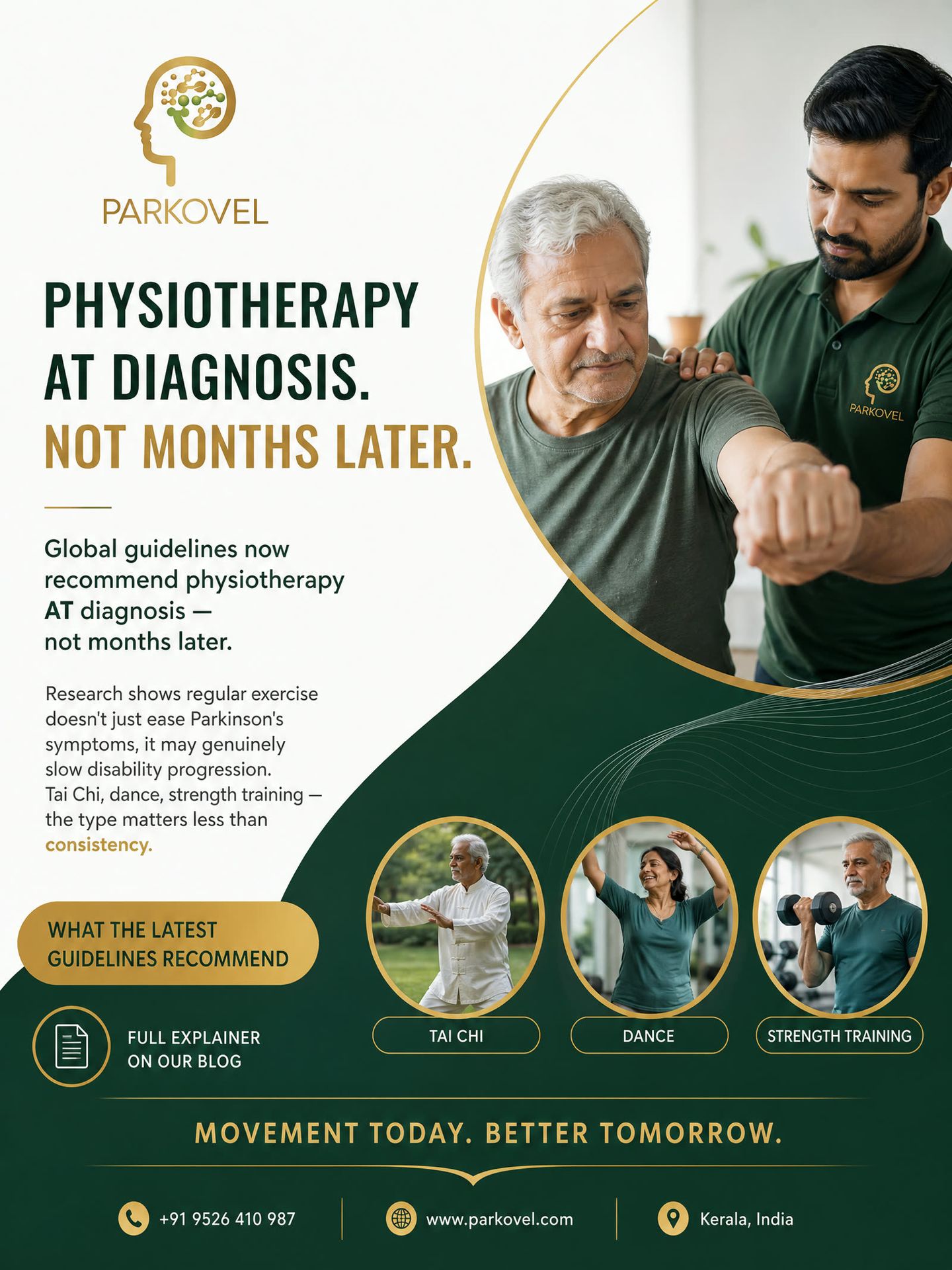
For decades, exercise was treated as a nice-to-have addition to Parkinson's care — something to try once medication had done its job. That thinking has fundamentally shifted. Global clinical guidelines now recommend physiotherapy referral at the time of diagnosis, not months or years later, reflecting a substantial body of research showing exercise doesn't just ease symptoms, it may genuinely alter how the disease progresses.
The Evidence Behind the Shift
Exercise can improve symptoms and may alter disease trajectory, with beneficial effects on the severity of motor signs and quality of life demonstrated across most types of physical exercise studied in people with Parkinson's disease. This isn't a single small study — it's the consistent finding across systematic reviews and meta-analyses pooling dozens of randomised controlled trials.
Why Timing Matters So Much
Early referral to a physiotherapist at the time of diagnosis is now recommended in global guidelines, and research shows multiple forms of exercise have measurable benefits in early and mid-stage disease, across a range of both motor and non-motor symptoms. Longitudinal research reinforces this further: evidence confirms that disability is delayed when regular exercise is sustained over long periods — meaning the benefit compounds the longer someone stays consistent, which is a strong argument for building an exercise habit as early as possible after diagnosis.
What Kinds of Exercise Help Most
Different exercise types appear to target different Parkinson's challenges. Tai Chi, yoga, and traditional balance exercises can specifically optimise balance and mobility, both important for fall prevention. A large 2025 network meta-analysis reviewing 55 randomised controlled trials examined nine distinct types of exercise rehabilitation and their effects on limb balance, cognitive and emotional function, and quality of life in elderly Parkinson's patients — reinforcing that variety, not just volume, matters. Even respiratory-focused training has a role: expiratory muscle training has the potential to markedly diminish the overall severity of dysphagia (swallowing difficulty) in Parkinson's patients, a less obvious but clinically meaningful benefit.
How Exercise Might Work Biologically
Research is increasingly clarifying the mechanisms, not just the outcomes. Following physical exercise, researchers have observed a reduction in oxidative stress levels and improved mitochondrial function in animal models — both processes directly implicated in the neurodegeneration seen in Parkinson's disease. More recent research frames exercise as a genuine "multitarget therapy," modulating myokines (muscle-released signalling molecules), neurotrophins (proteins that support neuron survival and growth), and inflammation simultaneously — suggesting exercise works through several complementary biological pathways at once, not just one.
Building a Sustainable Routine
The research consensus doesn't point to one single "best" exercise — it points to consistency across varied movement: aerobic activity for cardiovascular and mitochondrial benefit, balance-focused practice like Tai Chi for fall prevention, and strength training to maintain functional independence. For most patients, a physiotherapist experienced in Parkinson's care can design a routine that evolves appropriately as the disease progresses, rather than a generic program.
Frequently Asked Questions
How soon after diagnosis should Parkinson's exercise start?
Current global guidelines recommend physiotherapy referral right at diagnosis, not after symptoms have progressed — earlier intervention is consistently linked to better long-term outcomes.
What's the single best type of exercise for Parkinson's?
Research doesn't point to one winner — a mix of aerobic exercise, balance training (like Tai Chi), and strength work appears more beneficial than any single modality alone.
Can exercise actually slow Parkinson's disease progression?
Emerging evidence suggests sustained, regular exercise may delay disability progression, likely through effects on inflammation, mitochondrial function, and neuroprotective signalling — though it isn't a cure or guaranteed to work identically for everyone.
Is it too late to start exercising after years of a Parkinson's diagnosis?
No — while earlier intervention shows the strongest evidence, exercise continues to provide measurable symptom and quality-of-life benefits at every stage of the disease.
A well-structured movement routine works best as part of a complete care plan — alongside prescribed medication, speech and nutritional support, and complementary formulations like Parkovel365, all guided by your treating neurologist.
Sources
- PubMed, "Physiotherapy and Exercise in Parkinson's Disease" (2025)
- Frontiers in Neurology, "The effects of nine types of exercise rehabilitation therapies on improving limb balance, cognitive and emotional function, and quality of life in elderly patients with Parkinson's disease: a network meta-analysis of 55 RCTs" (2025)
- Frontiers in Aging Neuroscience, "Exercise as a multitarget therapy: modulating myokines, neurotrophins, and inflammation in Parkinson's disease" (2025)