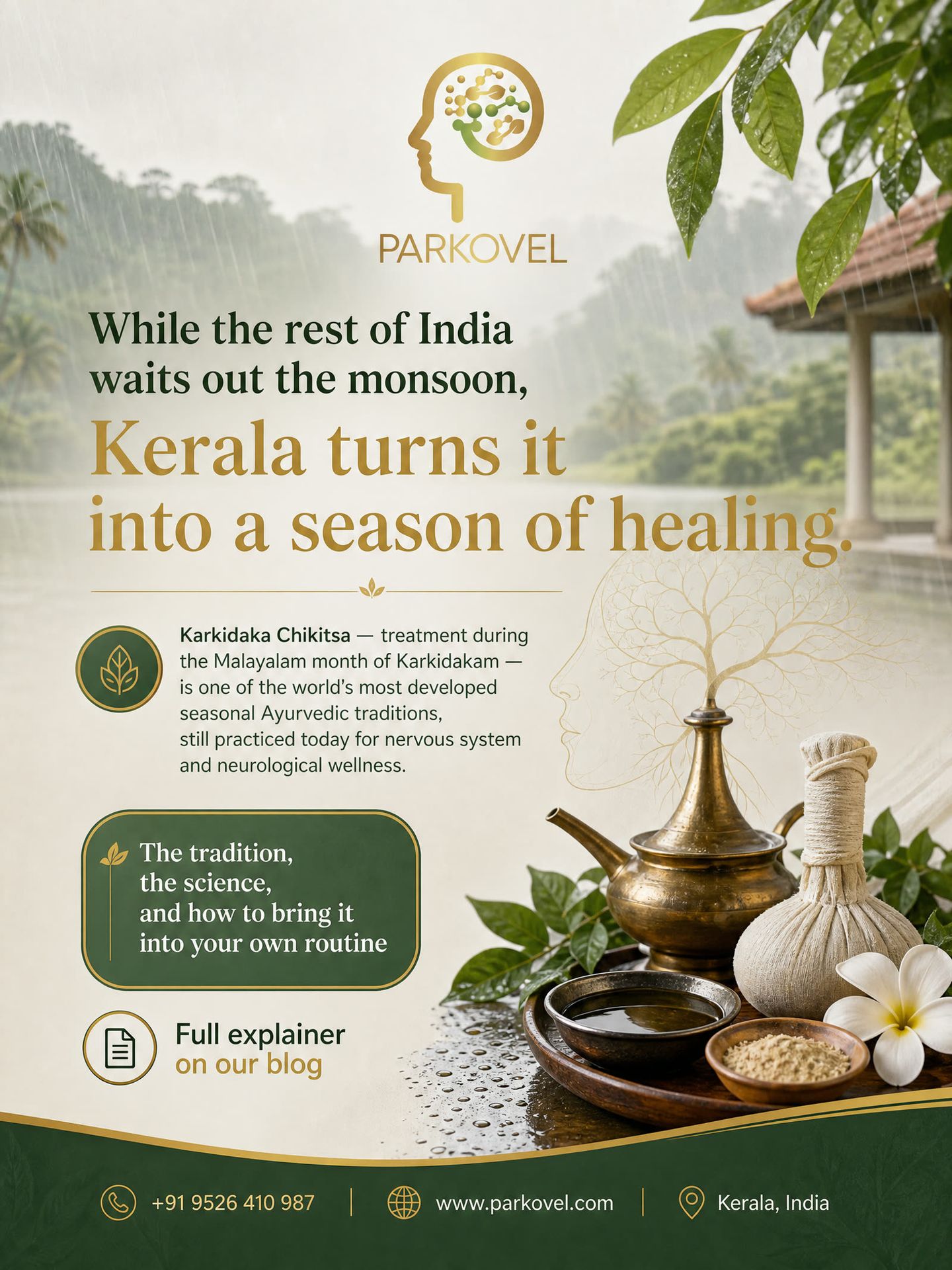
While much of India waits out the monsoon indoors, Kerala turns it into a season of deliberate healing. Karkidaka Chikitsa — treatment during Karkidakam, the Malayalam calendar month falling roughly between mid-July and mid-August — is perhaps the world's most developed seasonal healing tradition, and it remains a living, actively practised part of Kerala's medical culture today, not a historical relic.
Why Monsoon, of All Seasons
In Ayurveda, the monsoon period, known more broadly as Varsha Ritu, is understood as the time when Vata dosha — the bodily principle governing air, movement, and the nervous system — becomes most aggravated. This isn't just traditional theory disconnected from physiology: cold, damp conditions, irregular digestion due to reduced sunlight and appetite, and lower physical activity during heavy rains all plausibly affect the body in ways Ayurveda has long associated with Vata imbalance — the same dosha most closely linked, in Ayurvedic frameworks, to neurological conditions including "Kampavata," the classical description that closely parallels Parkinson's disease.
Kerala's approach turns this seasonal vulnerability into an opportunity. The cooler, humidity-controlled monsoon climate is considered ideal for the body to absorb medicated oils deeply during treatment, and the reduced environmental toxins and pollen during heavy rains are traditionally seen as supporting a cleaner internal detoxification process.
What Karkidaka Chikitsa Actually Involves
The treatment period typically centres on a structured combination of therapies rather than any single remedy. Daily self-massage (Abhyanga) with warm, medicated sesame oil is a cornerstone practice, believed to calm the nervous system, deeply nourish the skin, and improve circulation — mechanisms that align with modern understanding of how warm oil massage can support relaxation and blood flow. Nasya, the application of warm medicated oil or herbal drops into the nostrils, is traditionally used to protect and lubricate the respiratory passages during a season when infections are more common.
Diet shifts deliberately during this period too: warm, freshly-cooked, easily digestible meals replace heavier or cold foods, intended to support the digestive fire (Agni) that Ayurveda considers weakened by the season's dampness. Ginger-tulsi tea with black pepper is a common household remedy during Karkidakam, valued for supporting digestion and warding off seasonal colds.
Why It Matters Beyond Kerala
Karkidaka Chikitsa isn't only a regional curiosity — it's a genuine case study in how traditional medicine systems built structured, season-responsive protocols centuries before modern chronobiology (the study of how the body responds to seasonal and daily rhythms) became a recognised scientific field. For families managing chronic neurological conditions like Parkinson's, the underlying principle translates well beyond Kerala's borders: paying deliberate attention to how climate, diet, and daily routine shift with the seasons — rather than following a static routine year-round — is a genuinely useful habit, regardless of where in India or the world someone lives.
Approaching It Responsibly
Traditional Panchakarma-style monsoon treatments, including therapeutic purgation (Virechana) and medicated enemas (Basti), are more intensive interventions that should only be undertaken at a reputable Ayurvedic hospital under qualified supervision — not self-administered. Gentler home practices like Abhyanga self-massage, seasonal dietary adjustment, and herbal teas are generally safe for most people to incorporate independently, though anyone with a diagnosed condition like Parkinson's should check with their treating physician first.
Frequently Asked Questions
What does "Karkidakam" mean?
It's the name of a month in the traditional Malayalam calendar, falling roughly between mid-July and mid-August, corresponding to the peak of Kerala's monsoon season.
Is Karkidaka Chikitsa only for people who are unwell?
No — it's traditionally practised as preventive, seasonal wellness care for generally healthy people too, not only as treatment for existing conditions.
Can someone outside Kerala follow Karkidaka Chikitsa principles?
The specific hospital-based Panchakarma treatments are best sought at genuine Kerala Ayurvedic centres, but general principles — warm oil self-massage, seasonally adjusted diet, and attention to Vata balance during damp weather — can be adapted anywhere.
Is there scientific research behind Karkidaka Chikitsa specifically?
Direct clinical trials on the full traditional protocol are limited, though individual components (oil massage, dietary timing, seasonal routine) align with broader research on stress reduction, circulation, and digestive health.
For many families exploring Ayurvedic approaches to neurological wellness, Kerala's monsoon healing tradition is a reminder that consistency and seasonal awareness — not just a single remedy — are at the heart of Ayurvedic care, the same philosophy behind formulations like Parkovel365, made from ingredients grown and processed in Kerala's own Ayurvedic heartland.
Sources
- Ayur Bethaniya, "Welcoming the Monsoon: Ayurvedic Delights and Wellness Tips"
- Kairali Ayurvedic Center, "Monsoon Detox – Why Ayurveda in Monsoon to protect your Health and Wellbeing?"
- Dr. P. Alikutty's Ayurveda & Modern Hospital, Kottakkal, "Your Ayurvedic Guide to Staying Healthy & Disease-Free This Rainy Season"