In August 2025, a study published in Nature by researchers at Harvard Medical School proposed a striking idea: that a deficiency of lithium in the brain — the same element used in some psychiatric medicines, but at far smaller natural levels — may be an early driver of Alzheimer's disease. The study drew global headlines. Here's what it actually found, and why caution is essential.
What the Researchers Found
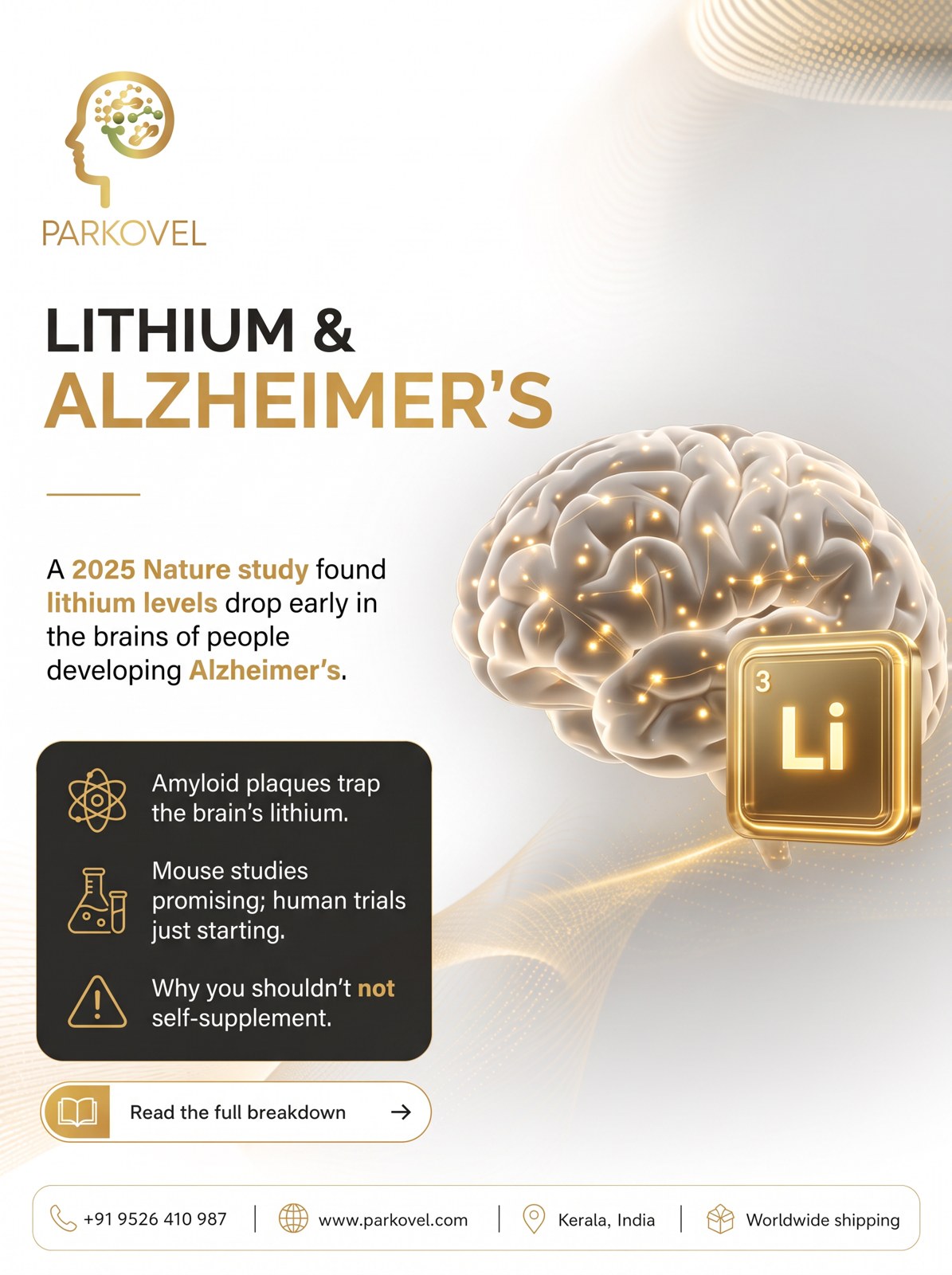
Working with brain tissue donated through the Rush Memory and Aging Project in Chicago, the team led by Bruce Yankner measured dozens of metals in brain and blood. Lithium stood out: it was depleted in the brain early in cognitive decline, in people with mild cognitive impairment as well as Alzheimer's disease.
They found a likely reason. Amyloid plaques, a hallmark of Alzheimer's, appear to bind lithium, trapping it and reducing the amount available to brain cells. In mice, a lithium-deficient diet accelerated amyloid and tau build-up, inflammation and memory loss.
The Lithium Orotate Finding
The researchers then tested different lithium compounds. Lithium orotate largely escaped being trapped by amyloid. In mouse models, very low doses — around one-thousandth of those used in psychiatric treatment — reversed Alzheimer's-like pathology, prevented brain damage and restored memory.
Why This Isn't a Recommendation to Take Lithium
Yankner himself warned against extrapolating from mice to humans until a controlled clinical trial has been done. Medical lithium has a narrow safety margin and can be toxic, especially in older adults, affecting the kidneys and thyroid. The evidence from people so far is limited: a small two-year pilot trial of low-dose lithium carbonate in mild cognitive impairment (LATTICE) did not show a clear benefit, though it tested a different compound and was not powered to settle the question.
A Johns Hopkins trial of lithium orotate in Alzheimer's (LiO-AD) has been registered, with an estimated start date of December 2026. It is an early feasibility and biomarker study, so definitive answers are still years away.
The Bigger Picture
The study matters because it points to a new, measurable, potentially modifiable factor in a disease that has resisted most treatments. It also connects to older population studies suggesting that regions with slightly higher natural lithium in drinking water have lower dementia rates — associations that now have a plausible biological explanation worth testing.
Frequently Asked Questions
Should I take lithium orotate supplements to prevent dementia?
No. There is no human evidence yet that it prevents or treats Alzheimer's, and lithium can be harmful without medical supervision.
Is this relevant to Parkinson's?
The study focused on Alzheimer's. Lithium has been explored in Parkinson's research in laboratory settings, but there is no clinical evidence to support its use for Parkinson's.
Do foods contain lithium?
Trace amounts occur in water, grains and vegetables. Whether dietary lithium affects dementia risk in people is not established.
When will we know if it works?
Not for several years. Early trials need to establish safe doses and biological effects before larger efficacy studies.
Sources
- Aron L, Yankner BA, et al., "Lithium deficiency and the onset of Alzheimer's disease," Nature (August 2025)
- NIH Research Matters, "Lithium levels tied to Alzheimer's disease and dementia" (2025)
- ClinicalTrials.gov, LiO-AD: Lithium Orotate in Alzheimer's Disease (NCT07459959)
- Being Patient, "Lithium for Alzheimer's? A Hype-Free Explainer"