Diet has long been treated as a peripheral concern in Parkinson's disease care, secondary to medication and physiotherapy. That's changing quickly, driven by a wave of research into the gut microbiome — the trillions of bacteria living in the digestive tract — and its surprisingly direct relationship to Parkinson's symptoms and progression.
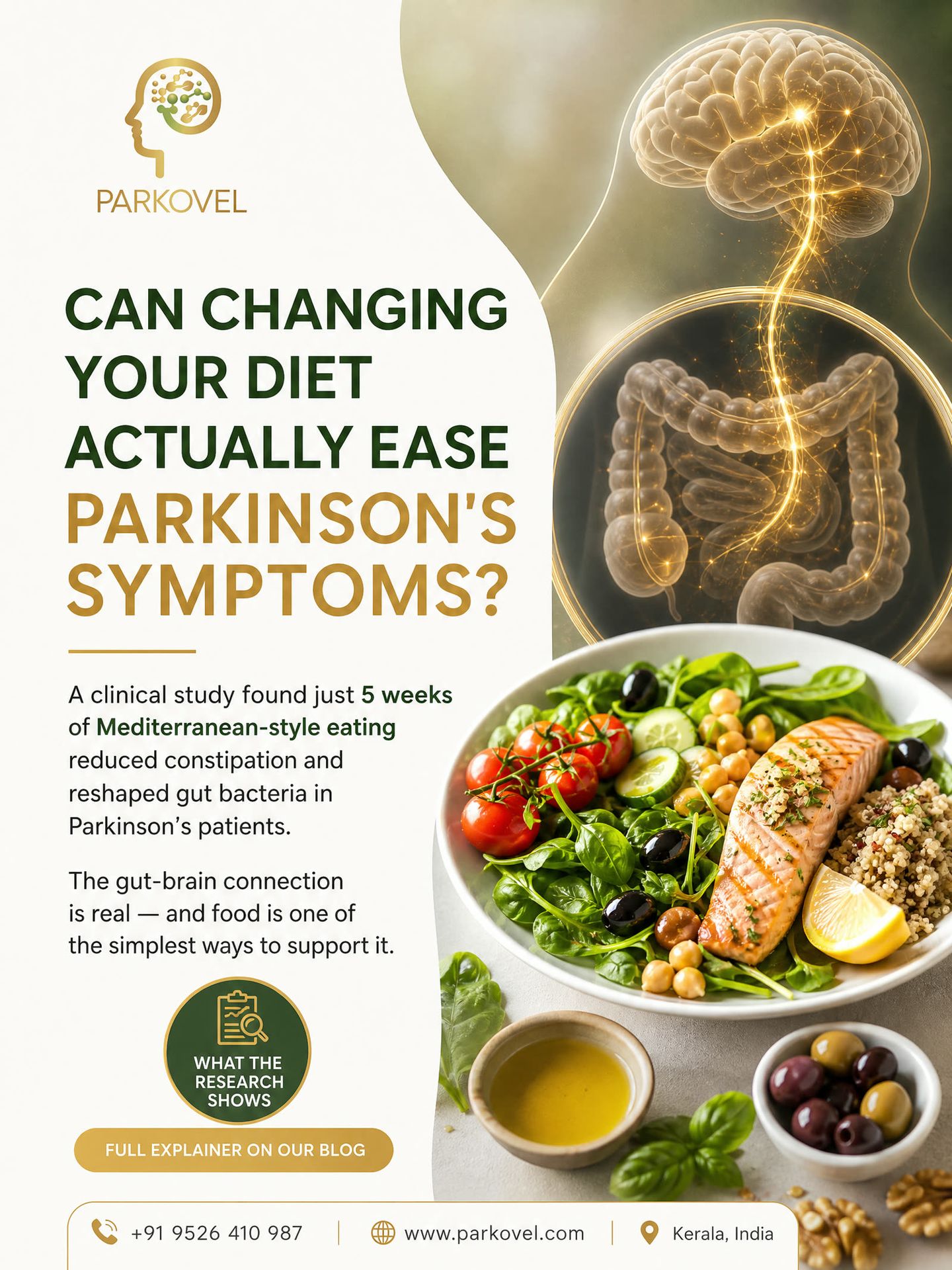
The Gut-Brain Connection, in Brief
Gut dysbiosis — an imbalance in the microbiome's normal bacterial population — is now understood to be involved in the occurrence, development, and progression of Parkinson's disease. Research shows dysbiosis can influence disease onset and progression through several distinct pathways: increasing intestinal permeability, aggravating neuroinflammation, promoting abnormal aggregation of alpha-synuclein fibrils (the misfolded protein central to Parkinson's), increasing oxidative stress, and decreasing neurotransmitter production. This is a genuinely two-way relationship — the gut affecting the brain, not just symptoms of the brain disease showing up in the gut.
Why the Mediterranean Diet Specifically
Among dietary patterns studied, the Mediterranean diet has drawn particular research attention. A Mediterranean diet can increase beneficial gut bacteria, helping correct gut dysbiosis in Parkinson's disease and potentially alleviate parkinsonism symptoms. The mechanism appears to centre on fibre: high dietary fibre and complex carbohydrates in the Mediterranean diet can be metabolised by gut bacteria into short-chain fatty acids (SCFAs) — compounds with genuinely beneficial effects that have been specifically studied in the context of Parkinson's disease.
What a Real Trial Found
Beyond theory, there's direct clinical evidence. A five-week Mediterranean diet intervention study in Parkinson's patients found that increased adherence to Mediterranean diet principles led to reduced constipation symptoms and measurable changes in fecal microbiota composition, alongside modest weight loss. Given how disruptive and common constipation is in Parkinson's — covered in more depth elsewhere on this blog — a dietary approach that meaningfully eases it, without medication side effects, is a genuinely practical finding for patients.
What "Mediterranean Diet" Actually Means in Practice
For readers less familiar with the term, it centres on vegetables, fruits, whole grains, legumes, nuts, and olive oil as dietary staples, moderate fish and dairy, and limited red meat and processed food. It's flexible enough to adapt to Indian kitchens too — dals, vegetables, whole grains like millet and brown rice, nuts, and healthy oils align naturally with the same principles, even without importing Mediterranean-specific ingredients wholesale.
Beyond Diet Alone: The Broader Microbiome Toolkit
Diet is one lever among several being studied for gut microbiome modulation in Parkinson's. Researchers are also examining probiotics, prebiotics, synbiotics, postbiotics, and even fecal microbiota transplantation as more targeted interventions — though these remain considerably more experimental than dietary change, which is low-risk, inexpensive, and can be started immediately by most patients.
Frequently Asked Questions
Can changing my diet cure or reverse Parkinson's disease?
No. Current evidence supports dietary changes, particularly Mediterranean-style eating, as helpful for specific symptoms like constipation and for supporting overall gut health — not as a disease-modifying cure.
How quickly can dietary changes affect Parkinson's-related constipation?
The clinical study referenced showed measurable improvement in a relatively short five-week intervention, though individual results vary and consistency matters more than any single week's eating.
Do I need to eat literally Mediterranean food, or can an Indian diet work similarly?
The underlying principles — high fibre, plant-forward, minimal processed food, healthy fats — can be achieved through a well-balanced Indian diet just as effectively as a literal Mediterranean one.
Is fibre alone enough, or does the type of food matter?
Both matter — the research points specifically to the fermentable fibre and complex carbohydrates common in Mediterranean-style eating, which feed beneficial gut bacteria in ways that produce measurable short-chain fatty acids.
Nutrition works best as one part of a coordinated care plan — alongside prescribed medication, physiotherapy, and, for many families, supportive Ayurvedic formulations like Parkovel365, all discussed with a treating neurologist.
Sources
- MDPI, "Mediterranean Diet Adherence, Gut Microbiota and Parkinson's Disease: A Systematic Review" (2024)
- PMC, "Mediterranean Diet Adherence in People With Parkinson's Disease Reduces Constipation Symptoms and Changes Fecal Microbiota After a 5-Week Single-Arm Pilot Study"
- PMC, "Gut Microbiota: A Novel Therapeutic Target for Parkinson's Disease"