Yoga and meditation have long carried a reputation as generally "good for you" without much specificity about who benefits or how. For Parkinson's disease, that's changed — a run of well-designed randomised controlled trials over the past few years has put real clinical evidence behind mind-body practices that Ayurveda has recommended for centuries.
The Headline Trial
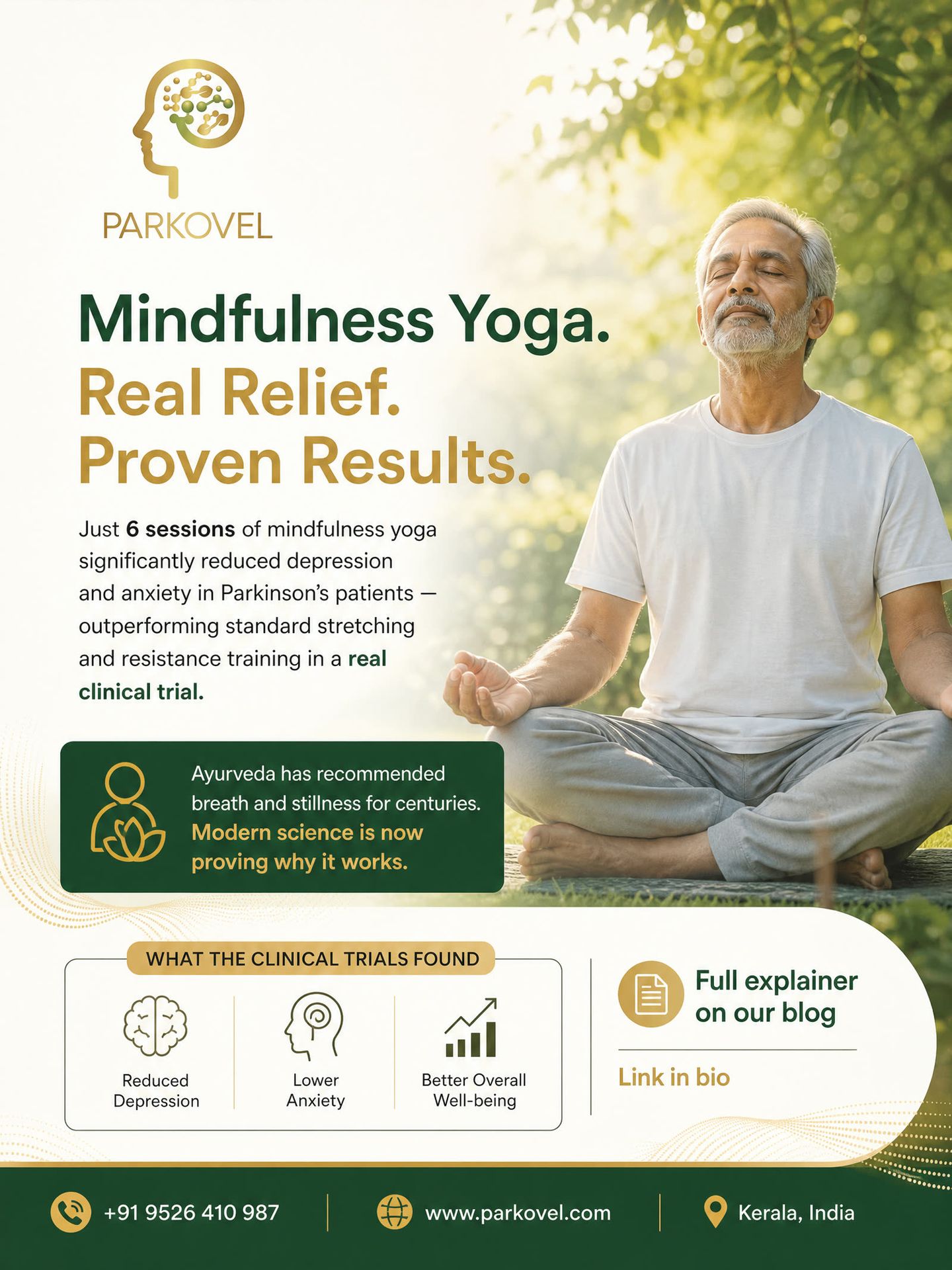
One of the most cited studies found that an average of just six sessions of mindfulness yoga — yoga combined with meditation and controlled breathing — significantly reduced depressive and anxiety symptoms in patients with mild-to-moderate Parkinson's disease, and did so more effectively than stretching and resistance training in the same trial. That's a notable finding: it wasn't yoga versus doing nothing, it was yoga outperforming another active, structured exercise program.
How the Program Was Structured
The specific protocol matters for anyone wanting to replicate similar results. Yoga instructors trained in mindfulness-based stress reduction taught eight weekly 90-minute sessions, split into 60 minutes of yoga postures, 15 minutes of meditation, and 15 minutes of controlled breathing. The underlying framework was built on "mindfulness-based stress reduction," a well-established meditation approach involving non-judgmental attention to thoughts and breath — not a specialised Parkinson's-only invention, but a well-validated general technique adapted for this population.
Yoga Versus Meditation: A Useful Distinction
A separate randomised clinical trial directly compared meditation and yoga as distinct interventions and found both had significant positive effects on anxiety symptoms, motor symptoms, mindfulness skills, and health-related quality of life at two months. Interestingly, meditation showed comparable but more sustained effects than yoga specifically for assessor-rated motor symptom severity and quality of life — suggesting that for some outcomes, the seated, breath-focused practice may have a slight edge in durability over the physical postures.
Beyond Mood: Physical and Spiritual Benefits Too
The benefits documented aren't limited to psychological measures. Mindfulness yoga has been shown to alleviate psychological distress while also improving spiritual well-being, quality of life, motor symptoms, and general mobility — a genuinely broad-spectrum result for a low-cost, low-risk, side-effect-free intervention, which is rare in Parkinson's research where most effective treatments carry some trade-off.
Why This Matters Alongside Medication
None of this research suggests yoga or meditation should replace levodopa or other prescribed treatment. What it does suggest is that a structured mind-body practice deserves a genuine place in a Parkinson's care plan — not as an alternative to medical treatment, but as a complementary layer addressing symptoms, particularly anxiety and depression, that medication alone often doesn't fully resolve.
Frequently Asked Questions
How many yoga sessions does it take to see a benefit?
The referenced clinical trial found meaningful improvement after an average of just six sessions over roughly eight weeks, though consistency over time likely produces the most durable results.
Is yoga safe for someone with Parkinson's balance problems?
Yoga can generally be adapted for balance limitations using props, chairs, or modified poses; working with an instructor experienced in Parkinson's or older-adult populations is recommended for safety.
Which is more effective for Parkinson's — yoga or meditation?
Research suggests both offer significant benefits; one trial found meditation had somewhat more sustained effects on motor symptoms specifically, while yoga combined with meditation and breathing showed strong results for mood symptoms.
Can yoga replace anti-anxiety or antidepressant medication in Parkinson's?
No — it should be considered a complementary practice alongside medical treatment, not a replacement, though it may reduce reliance on medication in consultation with a treating physician.
Mind-body practice sits naturally alongside the broader Ayurvedic approach to Parkinson's wellbeing — much like adaptogenic herbs such as Ashwagandha, which is covered in more depth elsewhere on this blog, both aim to support the nervous system's resilience to stress over time.
Sources
- Neurology Today (AAN), "Mindfulness Yoga Offers Relief from Depressive Symptoms in Parkinson's Disease, Study Finds"
- Karger / Psychotherapy and Psychosomatics, "Effects of Meditation and Yoga on Anxiety, Depression and Chronic Inflammation in Patients with Parkinson's Disease: A Randomized Clinical Trial" (2025)
- Michael J. Fox Foundation, "New Study: Yoga Lessens Parkinson's Anxiety and Depression"